Berry College is famous for its Ford Buildings; castle-like structures.
Those buildings, in their medieval-looking state, come complete with towers and ramparts. These, of course, are inaccessible to students. That would be a safety hazard. It violates fire code. No one should go up there.
No one.
Except me and Kirk, my best friend in college.
We knew of a tower where the door wasn’t locked; the handle was just broken off. A little wiggling of a knife in the door latch and we could open the door. Up a set of stairs we went to a long-abandoned room; square, probably twenty by twenty. A nice space, but for us, the main attraction was the ladder on the wall that led to a hatch. The ladder was literally falling off the wall, but we figured out how to navigate it.
Up we went, through the hatch, and out into the night air. Up there, we had a commanding view of the lawns around the Ford buildings, and all the couples who liked to walk and hold hands and sit on benches and enjoy each other’s company.
Up we went, hauling our load. Kirk had this great device called a water balloon launcher. Together, hiding behind the ramparts, we launched our water balloons at the unsuspecting couples below. And, when people began to figure out where the water balloons were coming from, down we went, through the hatch, out through the door with the broken handle, to walk down the hall as if we had merely been visiting some friends.
When we went through the door with a broken handle, we walked from one space to another: from public to private space, from allowed to forbidden space. When we went through the hatch, we went from one space to another: from inside to outside, from traveling to having reached our destination.
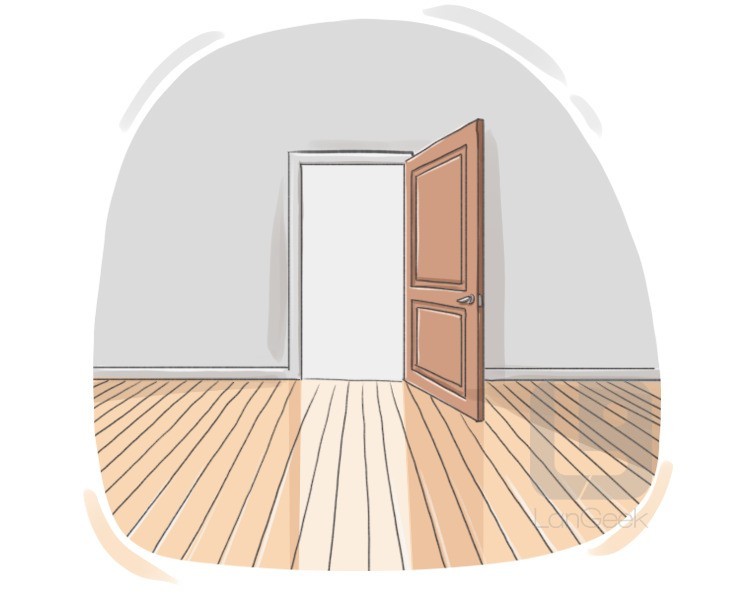
Moving through doorways moves us from one place, from one space, to another.
Let’s hear our scripture on this First Sunday of Advent. It’s called the Shema, which means “listen” in Hebrew, and its mentions the first object in our common devotional this season: gates.
Shema! Listen! That’s the command here in the scripture. Hear the law, hear this fundamental declaration of our faith: the LORD is our God, the LORD alone. There, think of the first and second commandments of the famous 10 commandments. Then, hear the next command: you shall love the LORD your God with your whole being; everything you have.
This scripture, initially buried in Deuteronomy, gained new life as the time of Jesus approached. Rabbis saw it as a way to instruct the people in the basics of the faith, and as a way to remind them to be attentive to their faith. When Jesus is asked by the pharisees what the greatest commandment is, trying to trap him by forcing him to pick one of the ten, Jesus instead pivots to the Shema. He quotes it, saying the first and greatest commandment is verse 5 of our scripture: you shall love the LORD your God with all your heart, with all your soul, and with all your might. Then, as Jesus does, he complicates it, saying the second greatest commandment is like the first: love your neighbor as yourself.
The author of Deuteronomy wants the people to pay attention, to be reminded, to keep the law in front of them. And thus the command that is the opening word of verse 4 in Hebrew
Shema! Which means hear. Listen up, God’s people! Hear what God has to say.
During this season, as we listen, what do we hear?
We hear Christmas music! It’s everywhere: on the radio, in our playlists in apps, in stores, in commercials. It’s the high season for Dean Martin, Frank Sinatra, and Nat King Cole. It’s also the high season for a song I absolutely despise: Mariah Carey’s, All I Want for Christmas Is You. All I personally want for Christmas is never to hear that song again.
We also hear commercials. All the things we can purchase, all the ways we can give gifts, the joy we can bring to family and friends when we purchase the right gift. Especially if we buy a car and put one of those big red bows on it. Or if we buy the big TV so we can watch the New Year’s Day Bowl Games on the latest and greatest. Side note: James Madison University should be in one of those bowl games. Not that I’m biased.
We also hear parties. Our calendars fill and we go from party to party. It’s a great time for socializing, for building connections, as we attend these parties seemingly nightly. Then, there are charitable gatherings, service projects, all sorts of things to attend.
We hear the noise of family as they gather with us or as they will later on in the season. Our communication increases as we make plans for travel, for Christmas morning, for all our family traditions.
We hear lots of things. We’re listening to lots of things. Maybe some days, we feel like the Grinch, who knew that on Christmas morning, “all the who girls and boys would wake bright and early. They’d rush for their toys and then all the noise, noise, noise, noise!”
Fair to say, there’s much to hear this time of year. There’s much to capture our listening attention.
It’s easy to be distracted.
Shema! Hear! Listen!
That’s the command: be aware, be attentive, that your first love is the LORD your God, the LORD alone.
But there’s so much this time of year to distract our attention.
As we approach Advent, we want to be focused on our faith. In contrast to the secular version of the season, this is a time of waiting, preparing, anticipating the arrival of the Christ child. Advent calls on us to examine our faith, to be reflective, of the things we’re waiting for. Where are we waiting for Christ to come into our lives and do a good work? Where are we anticipating that God will do something for our families? How are we preparing for our faith to grow? Advent is like Lent in that way, but of course outside the walls of this church, things feel very differently than they do during Lent.
And as much as we want to pay attention to our faith during this season, it’s so easy to be distracted by all the music, all the things to buy, all the parties and obligations to attend. It’s easy to be distracted.
That’s what Jill Duffield speaks to in this week’s readings in our common devotional, Advent in Plain Sight. It’s not too late to get started and we have some copies ready for purchase after the service. She talks about how to keep our faith in front of us, how to make it a part of our rhythm this season, even with all the ways to be distracted.
That can begin by making reading that devotional a part of our daily rhythm. Shema, listen; to hear her devotionals on a daily basis is a way of centering our faith during this busy season.
And then, there’s another way to pay attention; a way to remind ourselves to Shema, hear, to pay attention our faith this season.
Have you ever seen one of those small scrolls in a clear tube attached to a doorway? You’ll often find them at the most-used entrance to a home for a Jewish family. When you go through the doors of the main entrance for Temple Beth Israel, there’s one there on the doorframe. Those are called mezuzahs, and they contain, in Hebrew, the Shema: Deuteronomy 6:4-9. It’s both a sign of blessing on the house and a physical reminder to pay attention to our faith.
In fact, putting a mezuzah on a doorframe is the last command of the Shema. Verse 9 of our scripture this morning says, “and write them on the doorposts of your house and on your gates.” Such is a way, when coming and going, to be reminded of our faith and the way that our love for God should be at the center of all we think, say, and do.
When we walk through doorways, we change planes of existence. That may sound grand, but consider how things change when you walk through a doorway; how our thoughts turn to other things. In my opening illustration, I talked about going from the public to the private, and then from the indoors to the outdoors. Then, there are simpler illustrations. When I walk through the doorway from my office into the larger office, I move from a more private space to a more public space, and usually my thoughts are on whatever conversation I’m about to have with a staff member or on getting more tea. When I walk through the door of my house and out to my car in the mornings, I move from the peace of my home out into the world, ready to engage with whatever the day has for me. When I make that move, when I change that plane of existence, I often think of this famous quote from The Fellowship of the Ring by J.R.R. Tolkien:
“’It’s a dangerous business, Frodo, going out of your door,’ [Bilbo] used to say. ‘You step into the Road, and if you don’t keep your feet, there is no telling where you might be swept off to.'”
When we walk through doorways, which we do all the time, every day, we move through different facets of our lives. We’re swept away sometimes by the obligations that come as we enter through the doorway at work or on a board, or our minds are swept away as we enter our homes, thinking of all the tasks that lay before us, even like laundry and dishes.
When we walk through doorways, through gates, we move through different facets of our lives. Those doorways usher us into obligations, needs, wants, agitation and peace, hope and despair, joy and sorrow; all the things that come with life. And it’s easy to get distracted, especially this time of year, swept along the road of life like a fast-moving river, losing sight of our faith.
But Shema! Hear! Listen! God is speaking to us even through this busy season. God is calling to us: prepare yourself, the Advent of God made flesh, Immanuel, is coming. What are you preparing for? Where do you need the Advent of Christ in your life? Where do you need a fresh outpouring of God to come and meet you? What do you need from God in your faith this Advent season?
God has a message for you. God has something to share with you during this season. But it requires we pay attention to our faith, not allowing all the doorways we walk through, and the distractions they bring, to keep us from hearing from God.
How do we Shema, listen, this season?
Let’s affix a reminder to our doorposts. As you leave, grab one of these from an usher. It simply says “Hope,” the theme for the first Sunday of Advent as we mark hope, peace, joy, and love through the Advent season.
When you walk through the door of your house, or office, or wherever you put it, let it be a reminder to you to listen to God during this season. To be reminded of your faith. God is speaking to us, always, and that’s reason to hope this day. God’s not done with us yet; God speaks a word out of God’s love for us. Let affixing this sign of hope be a reminder to be focused first and foremost on our faith during this Advent season, no matter all the distractions that moving through the many doorways of our lives bring.
The call on our lives is to attend to the greatest commandment: love the LORD, your God, with all you think, say, and do. Let us do just that this Advent season. As you walk through the doorways and gates of life, hear God speaking to you, bringing you the hope of this season.
Shema! Hear. Listen. Amen.
 Ted Goshorn